Leopard Gecko

Reptile Gecko Beginner-friendly

A compact, ground-dwelling gecko from rocky arid regions, prized for clear day-night habits, expressive tail behavior, and a feeding style that fits well into predictable routines.
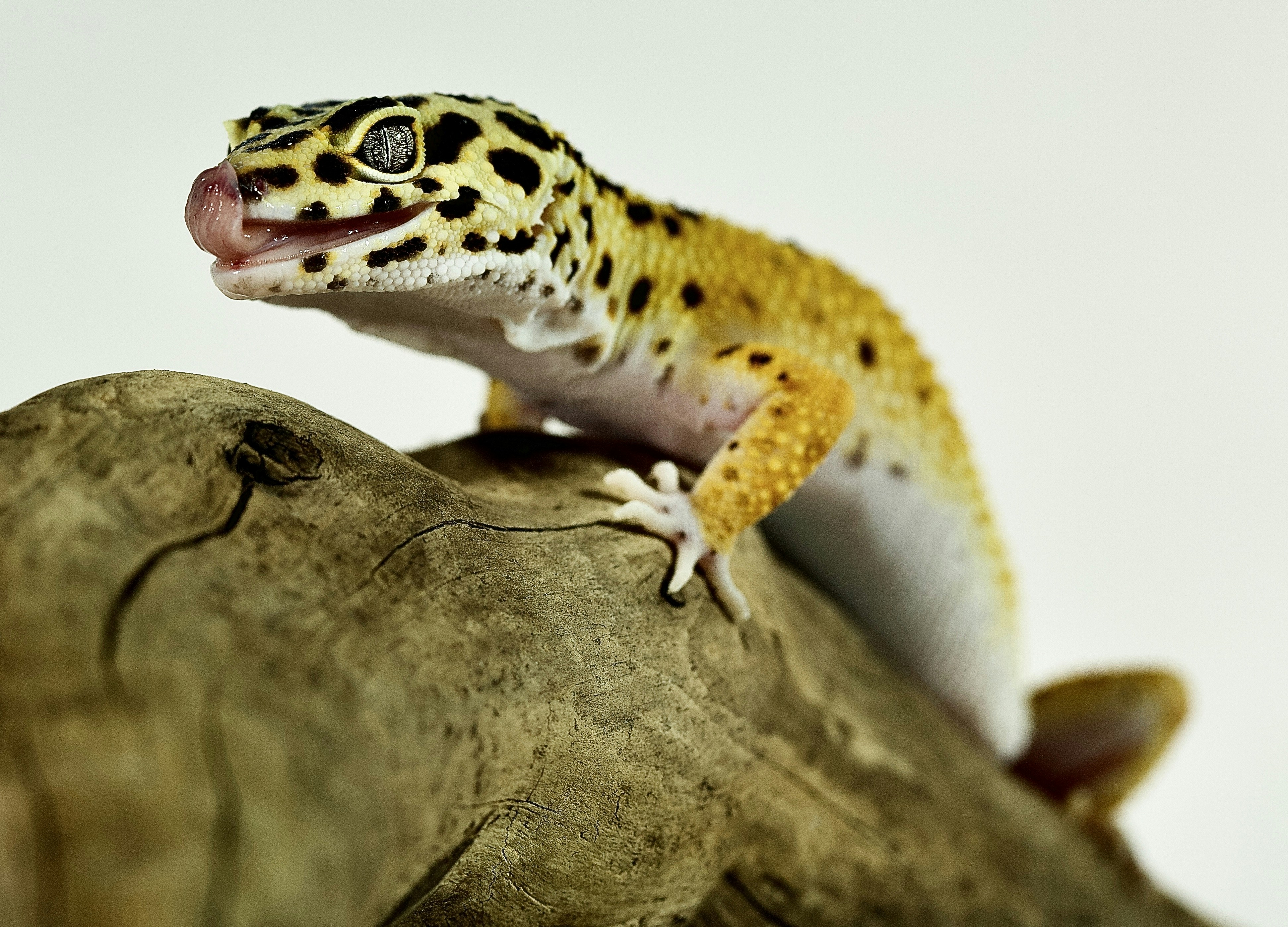
Leopard gecko

Species Overview

The leopard gecko, Eublepharis macularius, is a small terrestrial gecko named for juvenile spotting and bold tail storage. Unlike many geckos, it has movable eyelids and lacks adhesive toe pads, which makes its movements feel deliberate and easy to read.

Wild populations occupy rocky scrub and arid grassland edges where they shelter under stones and in burrows during the day, emerging at dusk and dawn to hunt invertebrates. In homes, they thrive when keepers respect this crepuscular rhythm and provide stable gradients instead of constant “hot everywhere” setups.

Their calm handling tolerance and modest space requirements have made them a common ambassador species for ethical reptile keeping—provided nutrition, calcium balance, and shedding support stay consistent across seasons.

Scientific Classification

  • Kingdom: Animalia
  • Phylum: Chordata
  • Class: Reptilia
  • Order: Squamata
  • Family: Eublepharidae
  • Genus: Eublepharis
  • Species: E. macularius

Natural Habitat

Leopard geckos are distributed across dry, rocky landscapes in Afghanistan, parts of India, Iran, Nepal, and Pakistan. Microhabitats are often crevice-rich and sparsely vegetated, where heat radiates quickly after sunset and humidity hides in thin boundary layers beneath stones.

Seasonal shifts in prey availability and temperature drive subtle changes in behavior: animals may shorten activity windows, reduce feeding frequency, or spend more time in cooler refuges. Captive habitats should mimic these gradients rather than one uniform box temperature.

Because they are ground-oriented, they benefit from low, wide enclosures with multiple secure hides along the warm-to-cool axis, not tall vertical space that never gets used.

Field notes (generalized)

  • Thermal strategy: Evening hunting after surface heat fades
  • Moisture: Localized humidity pockets under cover and rocks
  • Cover: Rock piles, compact soil burrows, sparse vegetation
  • Activity: Crepuscular (dawn/dusk) with occasional night movement

Conservation context

  • Habitat fragmentation and land-use change
  • Collection pressure in some regions for the pet trade
  • Climate variability affecting seasonal insect abundance
  • Always verify legal sourcing and captive-bred documentation

Care Requirements

Housing

  • Adult minimum floor space: prioritize length over height (commonly 90–120 cm long for one adult; larger when possible)
  • Substrate: tile, paper, or safe bioactive mixes—avoid loose particulates that risk ingestion in high-stress animals
  • At least three hides: warm, cool, and humid (moist moss hide) to support shedding
  • Low climbing: cork bark and flat stones; avoid tall vertical gaps that encourage falls
  • Spot-clean feces and urates daily; rotate decor monthly to disrupt parasite cycles

Temperature and lighting

  • Warm hide floor: roughly 88–92°F (31–33°C) measured with a digital probe
  • Cool side: mid–high 70s°F (~24–26°C) to permit self-regulation
  • Night drop: safe room-temperature lows if species-appropriate; avoid chronic cold
  • Many keepers provide gentle UVB in a Ferguson zone 1–2 range; discuss specifics with a reptile vet for your setup
  • Use a thermostat on any undertank or overhead heat source to prevent burns

Diet

  • Invertebrate-based diet: crickets, dubia roaches, mealworms (moderation), and varied rotation to balance micronutrients
  • Gut-load feeders with low-oxalate greens and minimal fruit sugars
  • Calcium with vitamin D3 on a schedule matched to UVB exposure and life stage
  • Fresh water in a shallow dish; occasional tong-feeding helps shy animals establish a routine
  • Track body condition: tail stores energy—sudden tail thinning warrants professional assessment

Health and wellness

  • Watch for: retained shed on toes, asymmetric swelling, mouth reddening, or labored breathing
  • Parasites: fecal exams help catch subclinical burdens before crashes
  • Shedding: provide humid hide; never pull skin—soak only as directed
  • Brumation: not every gecko needs a winter fast—follow species-appropriate guidance

Behavior and enrichment

  • Tail talk: slow lifts and lateral waves often signal curiosity or mild stress—pair with context (handling, feeding, new decor)
  • Handling: scoop support from below; avoid grabbing the tail (autotomy risk)
  • Enrichment: rotate hides, scatter-feed in a tray, and offer scent-safe novel textures weekly

Fun Facts

Eyelids

Movable eyelids help protect eyes from dust—an unusual trait among common pet geckos.

Tail reserve

Fat stores in the tail buffer short fasting periods; sudden changes in tail thickness are a keeper’s first “dashboard light.”

Color projects

Captive line breeding produced many pattern and color varieties—welfare still comes from husbandry, not hue.

Long-lived for their size

With consistent care, 15–20+ years is achievable—plan enclosure upgrades and vet relationships accordingly.

Quick Facts

Scientific Name: Eublepharis macularius
Average Size: 20–28 cm (8–11 in)
Lifespan: Often 15–20+ years
Diet: Insectivorous
Conservation Status: IUCN: Least Concern (2017 assessment)
Native Range: SW/ Central Asia